


Dear customers and partners!
On 1 October, Russia 24 aired a report on Allergarda, the world's first vaccine against birch pollen allergy. Veronika Skvortsova, Head of Russia's Federal Medical-Biological Agency (FMBA), reported the results of the 2026 studies: a sevenfold reduction in allergy symptoms and a significant increase in protective antibodies in 100% of patients. The findings were published in the journal of the European Academy of Allergy and Clinical Immunology.
Birch pollen allergy is one of the most common allergies. Cross-reactivity means that dozens of everyday foods can also cause problems: apples, pears, peaches, carrots, celery, nuts, soy, potatoes, tomatoes and even spices. For millions of people, this means serious dietary restrictions both during and outside the pollen season. Traditional allergen-specific immunotherapy (ASIT) requires up to 30 injections, whereas Allergarda is a recombinant genetically engineered vaccine administered as a course of just five subcutaneous injections. The vaccine was developed by the National Medical Research Centre for Allergology and Immunology of Russia's FMBA together with its industrial partner, GENERIUM JSC. The relevant excerpt from the broadcast is included below.
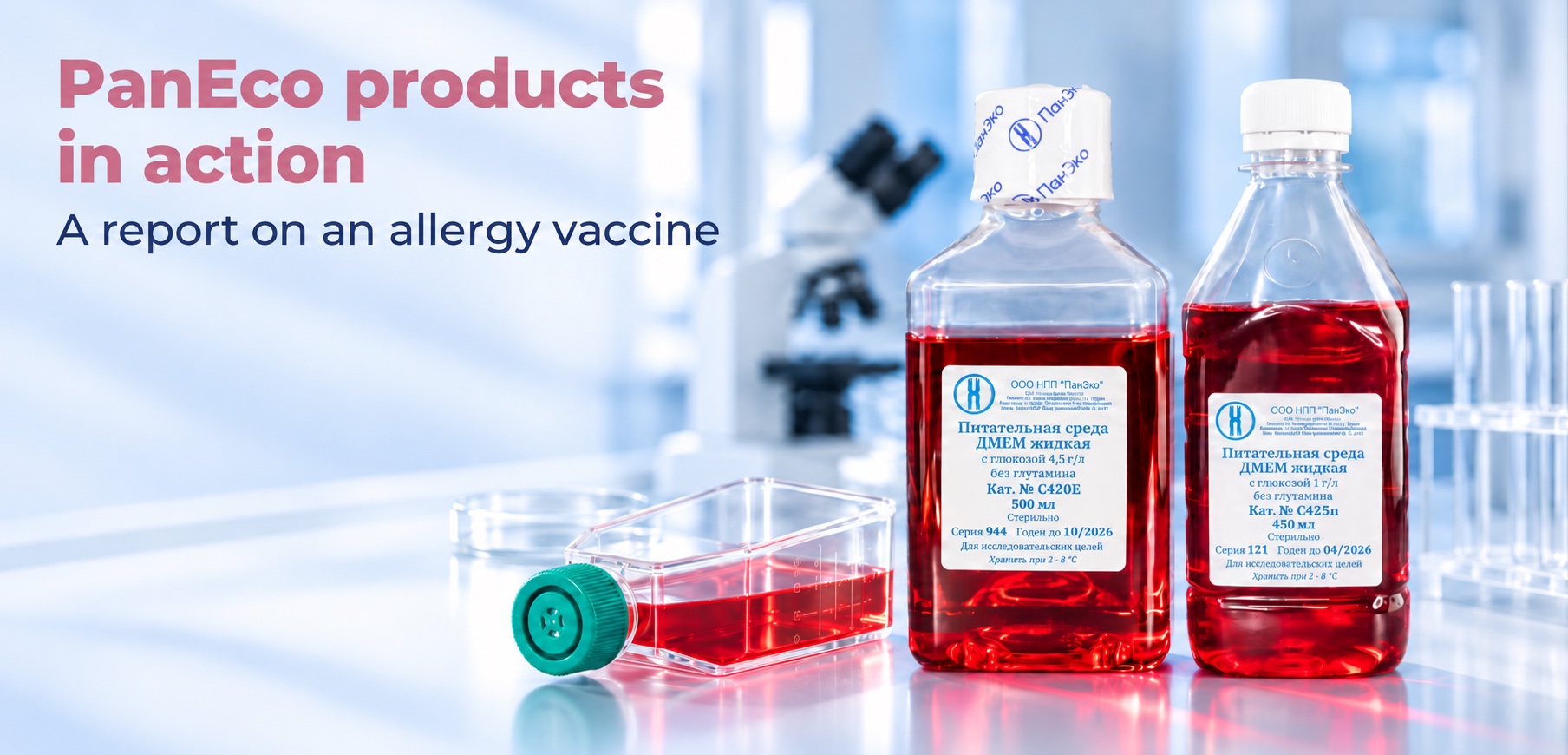
The broadcast shows products manufactured by PanEco : DMEM culture medium. It is one of the basic media for culturing a wide range of mammalian cells. It is widely used in immunological, oncological and virological research, as well as vaccine production. Its high glucose and amino acid content supports rapid growth and high cell density, which is particularly important when working with cell lines used in vaccine development.
PanEco prepares liquid and powdered culture media from individual components. This allows flexible control of medium composition, consistent reproduction of formulations from batch to batch, and adaptation to researchers' specific needs. This approach supports stable and reproducible results, which are especially important in vaccine research, where every variable matters.
The report also shows cell culture flasks made by the Korean manufacturer SPL Life Sciences, with which PanEco works on an exclusive basis. The flasks are made from crystal-clear polystyrene, have an ergonomic design with a short, wide neck, and stack easily to save incubator space. They are non-pyrogenic and non-cytotoxic, free from DNase, RNase and human DNA, and meet USP Class VI requirements. These characteristics make them suitable for demanding biotechnology applications, including work similar to that involved in vaccine development.
PanEco Group is proud that our products help scientists develop breakthrough solutions that improve the lives of millions of people.
Keep following our news and looking after your health. More discoveries lie ahead!