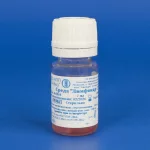

D-Biotin (vitamin B7, cell culture grade), 100 g, Brightol
Description…
A white or almost white crystalline powder; a water-soluble B vitamin (vitamin B7, biotin). Molecular formula C₁₀H₁₆N₂O₃S; molecular weight 244.31. CAS No. 58-85-5. Assay: 98.5–100.5%, actual result 99.9%. A carboxylase cofactor involved in fatty acid metabolism, gluconeogenesis and amino acid synthesis. Tested in cell cultures at PanEco.
Product:
A white or almost white crystalline powder. Specific rotation: +91.0°, specification +89 to +93°. Melting range: 229–230°C, specification 229–232°C. Loss on drying: 0.08%, limit ≤0.20%. Sulfated ash: 0.02%, limit ≤0.10%. Heavy metals: <10 ppm; lead: <2 ppm; arsenic: <1 ppm. Related substances: total impurities <0.5%, with no more than one impurity ≥0.25%. Microbiological purity: total colony count <1000 CFU/g; yeasts and moulds <1000 CFU/g. E. coli and Salmonella: not detected.
Intended use:
Used in cell culture as a component of animal and human cell culture media. Biotin is an essential cofactor for many enzymes and is involved in fatty acid synthesis, gluconeogenesis and amino acid metabolism. Used in biotechnology, cell biology and pharmacological research.
Directions for use:
For cell culture, add D-biotin to the medium according to the formulation, usually 0.1–1.0 µg/ml. Sterilize solutions through a 0.22 µm filter. For sterile work, open the package under aseptic conditions.
Storage conditions:
Store tightly closed in a cool, dry place, away from direct light and heat. Do not freeze. Expiry date: 01.09.2026. Transport by any covered means of transport.
This product is intended for research use